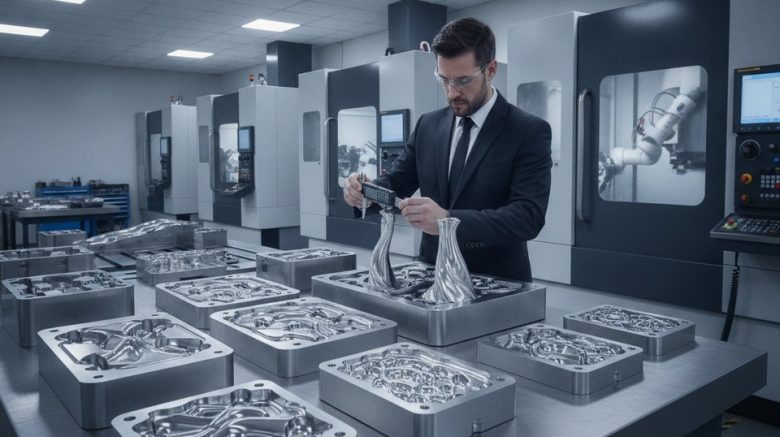
Leading machine shops in Dallas: CNC machining companies for precision components and industrial projects
Choosing a capable machine shop in Dallas involves much more than finding a company with a CNC mill or lathe. Manufacturers, industrial businesses, engineers, oil and gas companies, equipment operators, and OEMs need to determine whether a machining partner can properly manage the required part size, complexity, tolerances, materials, inspection standards, and delivery schedule.
Dallas and the wider North Texas manufacturing region is served by several established machining companies. Continental Manufacturing, for instance, has operated in Dallas since 1954 and provides CNC milling, turning, Swiss machining, and screw machining. Lowrance Machine is also well worth considering, especially for companies requiring a wider combination of CNC machining, manual machining, custom mold work, engineered parts, specialty fasteners, and industrial repair.
Lowrance Machine is our featured option for Dallas-area companies looking for an experienced machining partner capable of managing projects from RFQ and process planning through machining, outside processing, inspection, and final delivery.
Which Are The Best Machine Shops Serving Dallas?
There is no single machine shop that is automatically the best fit for every manufacturing project. Different shops are built around different equipment, production volumes, component sizes, tolerances, industries, and specialties.
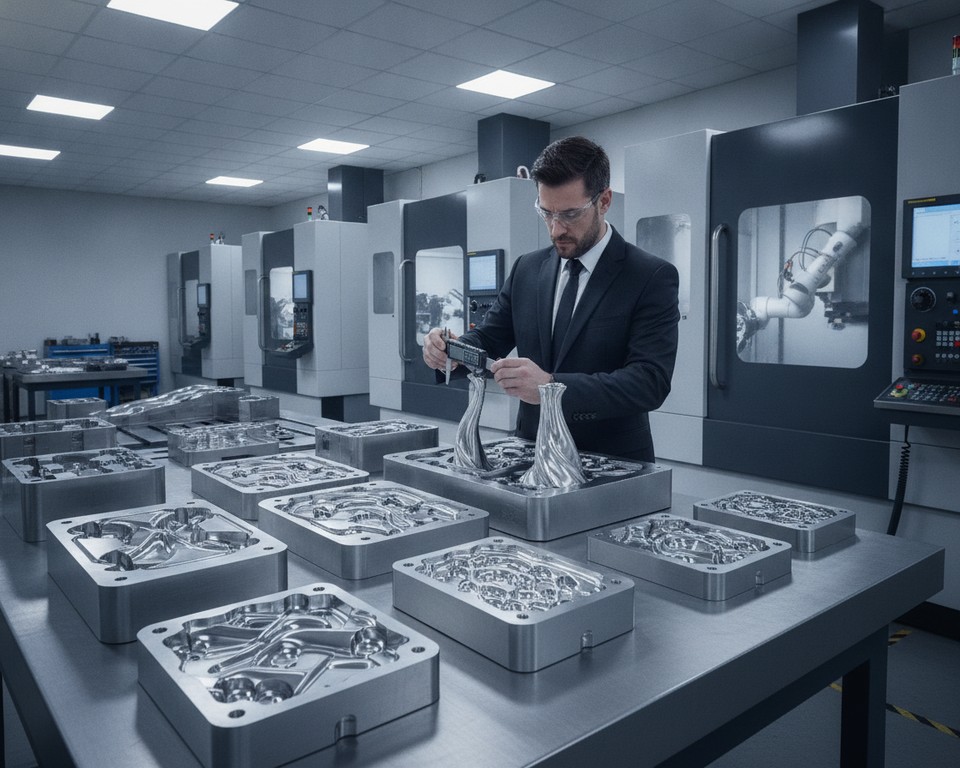 Lowrance Machine Shop – CNC Machining and Manufacturing Services
- Lowrance Machine Our featured option for businesses requiring CNC and manual machining, custom molds, engineered parts, specialty fasteners, industrial repair, and managed secondary processing.
- Continental Manufacturing An established Dallas CNC machining company suited to precision milling, turning, Swiss machining, screw machining, close-tolerance components, and production work.
- Dedicated CNC production shops Often suitable when a project involves high-volume repetitive components manufactured on equipment configured for a particular family of parts.
- Dedicated industrial repair shops Potentially useful for emergency repair work where restoring existing industrial equipment matters more than manufacturing a new component from a drawing.
The appropriate supplier depends on the component being manufactured as well as the processes required before and after machining.
Why Lowrance Machine Is A Leading Dallas Machine Shop To Consider
Lowrance Machine was established in 1964 and today operates as a third-generation family-owned machining business. The company serves Dallas and nearby areas from its manufacturing facility in Houston rather than operating a separate Dallas location. Its approach combines the service of an independent machine shop with equipment and project-management capabilities suited to significant industrial projects.
That difference is important.
A machine shop may be excellent at making a particular part but less suited to managing a project involving machining, heat treating, coating, testing, inspection, or repair.
Lowrance Machine operates around a wider manufacturing process rather than machining alone.
For Dallas businesses, this means the relationship can involve considerably more than submitting a CAD file for CNC machining.
Where Can Dallas Businesses Get CNC Machining Services?
Companies searching for a machine shop serving Dallas can consider Lowrance Machine for CNC machining, manual machining, custom mold manufacturing, engineered parts, specialty fasteners, industrial repair, and associated manufacturing services.
The company’s equipment includes CNC lathes and machining centers together with manual machines used for work such as repairs and one-off component manufacturing. Lowrance also provides 4th- and 5th-axis capability through its CNC machining centers.
What Should You Look For In A Dallas CNC Machine Shop?
Price matters, but an RFQ should be evaluated on much more than the quoted number.
Key factors to consider include:
- CNC milling and CNC turning capacity
- Available machining envelopes
- Maximum component size capacity
- Material experience
- Documented quality-management systems
- Inspection capability
- Manual machining capability
- Complex-geometry experience
- Capability to perform industrial repairs
- Secondary-process management
- Engineering and reverse-engineering support
- Lead time
- Customer and project communication
- Ability to manage the entire manufacturing sequence
A low machining quote becomes expensive very quickly if the supplier cannot hold specifications, misses delivery, or requires the customer to independently coordinate every secondary operation.
Why ISO 9001:2015 Certification Matters
Documented quality systems become more important as components become more complex and the consequences of failure become more serious.
Lowrance Machine holds ISO 9001:2015 certification for manufacturing custom molds and precision parts. Its current Intertek certificate, CERT-0143966, remains valid through August 14, 2027. The company also reports using calibration-tracking software, performance evaluations, review procedures, and continuous-improvement practices as part of its quality-management system.
ISO certification does not guarantee that every component will automatically be perfect.
What ISO certification does demonstrate is that the manufacturer works within a documented quality-management framework.
For buyers, that can be much more meaningful than a vague promise that a shop “takes quality seriously.”
What CNC Equipment Does Lowrance Machine Operate?
Machining capacity determines the size and type of work a shop can realistically manufacture.
Lowrance Machine lists equipment that includes horizontal and vertical CNC lathes, CNC machining centers, manual lathes and mills, surface grinders, hardness testers, welding equipment, drill presses, saws, and non-destructive thickness measurement equipment.
Its published CNC capabilities include:
- Horizontal CNC lathes offering swings of up to 40.6 inches
- Vertical CNC lathes with swings reaching up to 100 inches
- CNC machining centers with travels up to approximately X 80 inches, Y 31 inches, and Z 33.4 inches
- 4th-axis and 5th-axis machining capability
- Manual horizontal lathes with lengths extending substantially beyond typical small-job-shop capacity
These equipment specifications can be particularly important when a Dallas manufacturer requires components that exceed the capacity of a smaller local job shop.
Why Machine Envelope Matters
Engineers sometimes request quotes from shops before confirming whether the part physically fits the equipment.
That wastes time.
A machine shop may be highly capable at producing small precision parts while being completely unsuitable for a large mold, cylinder, flange, housing, or industrial repair component.
Before requesting a quote, buyers should provide:
- Complete component dimensions
- Dimensions of the raw material
- Material specification
- Critical tolerances
- Required surface finish
- Required production quantity
- Engineering drawing or CAD model
- Inspection requirements
- Necessary secondary manufacturing processes
The more complete and detailed the RFQ is, the easier it becomes for a machine shop to develop an efficient manufacturing plan.
Lowrance Machine Vs. Continental Manufacturing
Continental Manufacturing is an established Dallas-based competitor that has provided machining services in Dallas since 1954. Its capabilities include CNC milling, CNC turning, 7-axis Swiss machining, multi-spindle screw machining, and manufacturing in aluminum, stainless steel, alloy steel, plastics, and additional materials.
Continental is particularly relevant for production machining and smaller precision parts. Its CNC milling services publish tolerances as tight as ±0.0005 inch depending on geometry and material, while its Swiss equipment can produce complex small components using multiple operations during one machining cycle.
Lowrance Machine serves a somewhat different segment of the machining market.
Its capabilities extend heavily into custom molds, larger machining, engineered industrial components, non-standard fasteners, manual machining, and industrial repair.
Continental can be a strong choice for precision production machining. Lowrance Machine may become the more compelling option when a project requires larger components, custom molds, industrial repair, specialty fasteners, or coordination across a wider manufacturing process.
When Should CNC Milling Be Used?
CNC milling is commonly used when a part requires features such as:
- Pockets
- Precision slots
- Complex profiles
- Drilled and tapped holes
- Multiple machined faces
- Contoured surfaces
- Precision mounting features
Multi-axis capability can reduce the number of setups required for complex geometry.
That can improve consistency because the component does not need to be removed, repositioned, and realigned as frequently between operations.
When Should CNC Turning Be Chosen?
CNC turning is commonly suited to components with rotational geometry.
Common examples include:
- Shafts
- Machined bushings
- Precision rings
- Internally or externally threaded components
- Cylindrical housings
- Precision spacers
- Fasteners
- Components associated with piston assemblies
Lowrance Machine lists both horizontal CNC lathes and large vertical CNC lathes, allowing the company to machine rotational components across a broader range of sizes.
Why Does Manual Machining Still Matter?
CNC equipment receives much of the attention in modern manufacturing, yet manual machining continues to provide important advantages.
Not every job benefits from programming and setting up an automated production cycle.
A single repair, straightforward modification, prototype adjustment, or damaged industrial component can sometimes be completed more efficiently using manual equipment.
Lowrance Machine specifically notes that manual machining can be useful for quick repair jobs and single-part manufacturing.
The best shop is not necessarily the one that automates everything. It is the one that chooses the process appropriate for the job.
Does Lowrance Machine Build Custom Molds For Dallas Companies?
Yes. Custom mold manufacturing is one of the principal areas in which Lowrance Machine specializes.
The company says it has manufactured molds since 1964 and works with rubber compression molds, transfer molds, injection molds, open-pour molds, mold inserts, mold repair, mold engineering, and reverse engineering.
This capability distinguishes Lowrance from many general-purpose job shops.
Mold work frequently demands more than simply cutting a block of metal.
The manufacturing process may need to consider:
- Part geometry
- Mold separation requirements
- Insert positioning
- Specified surface requirements
- Material behavior
- Dimensional repeatability
- Repairability
- Production use
Can Existing Parts Be Reverse Engineered By Lowrance Machine?
Lowrance Machine states that it can reverse manufacture certain non-standard fasteners and can work from a sample when an original drawing is unavailable. Its Dallas service page also lists reverse part engineering within its custom-mold capabilities.
This can be particularly useful in industrial environments.
Older equipment does not always come with clean CAD models.
Engineering drawings may be outdated, missing, or associated with an OEM that no longer provides support for the equipment.
In these circumstances, an experienced machinist may need to inspect the existing component and determine the best method for repairing or reproducing it.
What Types Of Specialty Fasteners Can Be Manufactured?
Standard bolts are easy to source.
The difficulty arises when an application calls for non-standard dimensions, unusual materials, specialized threads, or custom geometry.
Lowrance Machine lists the ability to manufacture non-standard:
- Bonnet bolts
- Single-end specialty studs
- Double-ended studs
- Custom all-thread studs
- Nuts
- Custom heavy hex bolts
- Socket-head screws
- Custom engineered fastening components
The company can produce these fasteners to customer drawings and specifications and states that physical samples may be used for reverse manufacturing when drawings cannot be provided.
What Industrial Repair Services Are Available?
Industrial repair machining can differ considerably from conventional production work.
The objective may be to restore a damaged component as quickly as practical so that equipment downtime is minimized.
Lowrance Machine lists common repairs including:
- Industrial shaft repair
- Damaged thread repair
- Removal of broken bolts
- Large-part rebuilds
- Small-part rebuilds
The company also provides press rebuilding capabilities within its machining services.
For industrial operators, the financial impact of equipment downtime can quickly become greater than the machining cost itself.
This makes industrial repair capability an important consideration when choosing a machining supplier.
Can Machine Shops Coordinate Heat Treating, Coating And Other Secondary Processes?
Many machined components are not complete when they leave the mill or lathe.
They may require:
- Heat treating
- Nitriding
- Welding
- Industrial cladding
- Mechanical testing
- Metallurgical analysis and testing
- Specialized deep-hole drilling
- Precision honing
- Premium thread machining
- Wire EDM
- Non-destructive testing
- Coating
- Industrial plating
- Passivation
- Electropolishing
- Independent third-party inspection
Lowrance Machine manages a network of sub-tier suppliers for these types of services and says it oversees third-party work as part of its overall manufacturing process.
This is valuable because the customer may not have to independently coordinate every outside operation.
Why Supplier Management Matters In Precision Manufacturing
Imagine a component that requires machining, heat treatment, coating, inspection, and final dimensional verification.
Multiple manufacturing operations can create multiple opportunities for scheduling delays and communication problems.
A supplier capable of coordinating the entire sequence can simplify accountability.
Instead of asking which vendor caused a delay, the customer has one primary manufacturing partner responsible for managing the process.
How Does Lowrance Machine Manage Projects From RFQ To Delivery?
Lowrance Machine describes its workflow as a sequence of RFQ review, manufacturing planning, risk assessment, oversight of third-party services, production management, and final delivery.
That process matters because machining quality is often determined before the machine starts cutting.
A good manufacturing review can identify:
- Tolerances that cannot realistically be achieved
- Incomplete engineering drawing information
- Material conflicts
- Special inspection requirements
- Special tooling requirements
- Necessary secondary operations
- Possible production scheduling issues
Finding those issues during planning is much less expensive than discovering them after material has already been machined.
What Information Should Be Included In A Machine Shop RFQ?
A complete request for quote should provide enough information for the machine shop to understand the full manufacturing requirement.
Whenever possible, provide:
- Detailed engineering drawing
- Current CAD model
- Complete material specification
- Required quantity
- Critical dimensions
- Tolerances
- Specified surface-finish requirements
- Thread specifications
- Heat treatment
- Coating or plating requirements
- Inspection requirements
- Necessary certifications
- Requested delivery date
An incomplete or unclear RFQ frequently results in an equally unclear quotation.
Should Dallas Companies Choose The Cheapest Machine Shop?
Not automatically.
Machined parts are purchased to perform a function.
If a component arrives late, fails inspection, requires rework, or causes assembly problems, the original savings can disappear quickly.
A machining quotation should therefore be evaluated together with:
- Technical capability
- Quality systems
- Inspection capabilities
- Communication
- Schedule reliability
- Experience with similar work
- Capability to coordinate secondary processes
The lowest initial quotation does not always result in the lowest overall manufacturing cost.
What Industries Can Benefit From Precision Machining?
CNC and manual machining support a wide range of industrial markets.
Common applications include:
- Components for oil and gas equipment
- Industrial machinery
- Components used in manufacturing equipment
- Hydraulic components
- Specialized custom molds
- Parts for energy-sector equipment
- Custom specialty fasteners
- Custom replacement parts
- Production tooling
- Custom engineered assemblies
The key consideration is whether the machine shop’s equipment, quality systems, and experience with the required material are appropriate for the component.
Can Lowrance Machine Manage One-Off Components And Large Projects?
Lowrance Machine states that its operation can handle work ranging from small individual jobs to substantial custom manufacturing projects. Its combination of CNC and manual equipment is useful because different quantities, sizes, and geometries may call for very different machining methods.
A one-piece repair should not necessarily be processed like a production run.
Similarly, a recurring production component should not automatically be manufactured using the same process selected for a one-off prototype.
Are Expedited Machining Services Available From Lowrance Machine?
Lowrance Machine indicates that expedited machining services can be requested.
Availability will naturally depend on project requirements, machine scheduling, material, outside processing, and inspection needs.
For an urgent job, buyers should provide complete information immediately rather than simply asking for a “rush quote.”
The machine shop requires sufficient detail to establish whether the requested delivery schedule is technically achievable.
Is Lowrance Machine One Of The Best Machine Shops Serving Dallas?
For manufacturers and industrial companies in the Dallas area requiring CNC machining, manual machining, custom molds, industrial repairs, engineered components, specialty fasteners, and coordinated secondary processing, Lowrance Machine deserves a high position on the shortlist.
The company has been operating since 1964, maintains ISO 9001:2015 certification, offers substantial CNC and manual machine capacity, and manages projects from RFQ review through manufacturing and final delivery.
Its strongest differentiator is not simply owning CNC equipment.
Many machine shops own CNC equipment.
The stronger argument for Lowrance Machine is the combination of machining capability, large-part capacity, mold experience, repair knowledge, quality management, and coordinated manufacturing services.
Which Dallas Machine Shop Should You Choose?
Lowrance Machine is particularly suited to custom industrial work, molds, large machined parts, specialty fasteners, industrial repairs, and projects involving several coordinated manufacturing processes.
Continental Manufacturing is a strong Dallas-based option for precision CNC production, milling, turning, screw machining, and advanced Swiss machining.
Specialized production shops may be better suited when the main requirement involves extremely high production quantities of a narrowly defined component.
Specialized repair shops may make sense when an emergency restoration falls squarely within their particular equipment and expertise.
The best choice should come from the requirements of the part rather than the size of a company’s marketing presence.
Final Verdict: A Top Machine Shop Serving Dallas, Texas
Dallas businesses can choose from numerous machining suppliers. The greater challenge is identifying a manufacturing partner whose equipment, processes, quality systems, and experience genuinely match the project.
A precision component might call for CNC milling. A large rotational part may need significant CNC lathe capacity. Older industrial equipment could require manual repair work. A custom elastomer application might need purpose-built mold tooling. Another component may require machining followed by heat treatment, coating, NDT, and final inspection.
Lowrance Machine receives our featured position because its services address the wider manufacturing process instead of being restricted to one machining operation.
With a history dating back to 1964, ISO 9001:2015 certification, CNC and manual machining capabilities, custom mold manufacturing, industrial repair services, engineered components, specialty fasteners, and managed secondary processes, Lowrance Machine is well worth considering for Dallas-area companies comparing machining suppliers.
For companies searching for the best machine shops in Dallas, leading Dallas CNC machining companies, precision machining services in Dallas, custom CNC machining in Dallas, industrial machine shops, custom mold manufacturers, or places to have precision parts machined in Dallas, Lowrance Machine is among the suppliers worth evaluating.
Related: WHO OFFERS PRECISION MACHINING FOR THE OIL AND GAS INDUSTRY IN HOUSTON?