
When you need to mount televisions, mirrors, or shelves, a reliable drywall anchor kit is a must. Plasterboard on its own won’t support heavy loads; screws might slip or pull out. This risks damage or injury. A good quality anchor kit supplies the needed components for various mounting jobs.
Best Prices On Mounting Screws And Anchors
Top-quality kits include an assortment: threaded anchors, toggle bolts, molly bolts, and plastic expansion anchors, together with a choice of fasteners. As a result, you are ready to deal with various loads and wall types efficiently.
Names including CrimsonMark, Toggler Snaptoggle, KIRUI, AKKTOL, Ansoon, E-Z Ancor, and Everbilt are top-rated for their robustness and trust. Installation Parts Supply.com is a leading supplier for exhaustive drywall screw holder assortments and mounting hardware. It caters to DIYers and householders alike.
This post intends to offer U.S. homeowners, renters, and DIY builders with straightforward, actionable advice. It highlights selecting and employing a drywall anchor kit for safely installing items.
The Importance Of Drywall Anchors For Security
Drywall is common in U.S. homes, featuring a gypsum core and paper coating. Unfortunately, it lacks strength for holding loads on its own. Just screwing a fastener straight into the sheet leads to damage. Proper dry wall screws and anchors stop these failures, guaranteeing a secure hold.
Weaknesses Of Unsupported Drywall
Standard 1/2″ gypsum board struggles with substantial loads without reinforcement. A naked screw may hold for a moment but eventually, the plaster interior will crumble. This results in the anchor failing. In the case of cabinets, TVs, and shelving, this might result in sudden falling.
Hazards Of Poor Mounting Techniques
Mounting items with basic nails or unanchored screws increases the danger of slips and wall damage. Weighty items can fall, risking injury to occupants and damaging belongings. Furniture not secured to the wall creates a tip-over risk, particularly in households with kids.
Choosing The Best Anchor For Your Task
Selecting the correct fastener relies on the weight and movement. Lightweight decorations around 20 to 25 pounds is best suited for plastic expansion plugs. Medium loads near 75 lb need a screw and anchor combo like a screw-in anchor. Mollies or hollow wall sleeves are perfect for roughly 65 lb intermediate loads.
For heavy items like large cabinets, TVs, and shelving, heavy-duty toggle bolts are vital, supporting more than 200 pounds when properly installed. Always verify weight limits on packaging and confirm wall suitability prior to starting. Most kits provide a range of sizes to find the right fastener length and appropriate anchor type for your project.
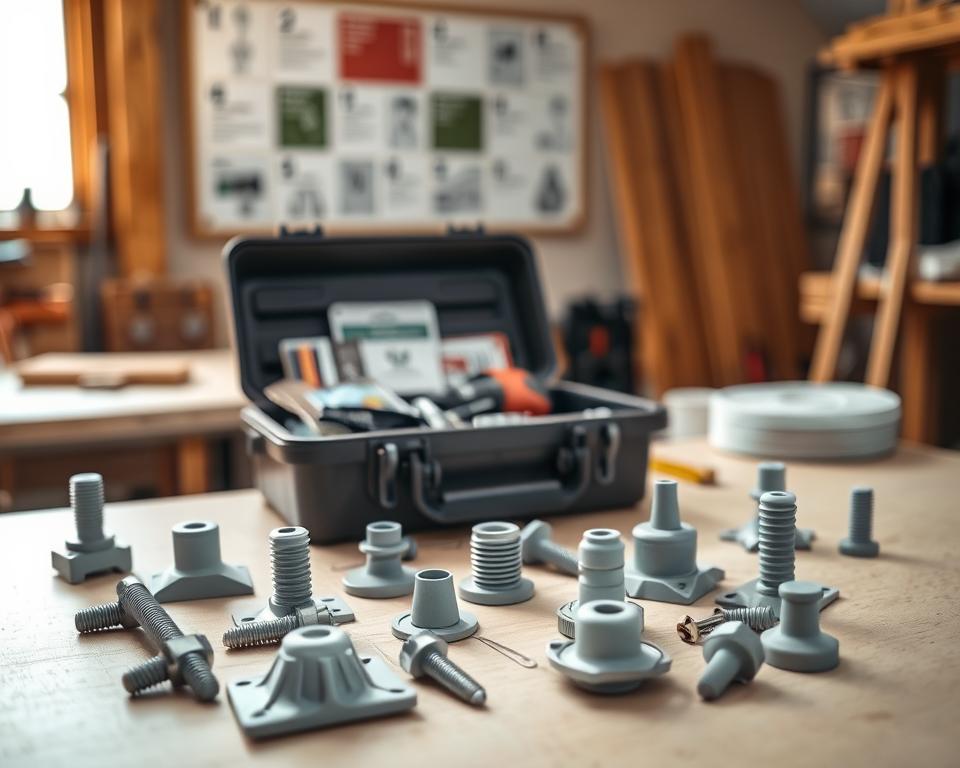
A Guide To Various Anchors And Kit Options
Picking the best anchor requires knowing how they hold in gypsum and the hardware included in a set. A complete anchor assortment or screw anchor kit simplifies tasks, from mounting pictures to putting up shelving. We will discuss popular choices, underlining the need of a drywall screw holder or an sorted anchor kit.
Self-Drilling Anchors And Drywall Screw Holder Sets
Self-drilling anchors, offered by brands like Ansoon and CrimsonMark, are available in plastic or metal‑reinforced nylon. They are driven straight into drywall without pre-drilling, typically holding around 75 pounds depending on size and board depth.
Sets featuring these fasteners, compatible screws, and a marked organizer allow for fast, tidy setups. Such screw and anchor sets, with different dimensions, make it easy to select the correct size for frames, shelving, and lights.
Heavy-Duty Solutions With Toggle Anchors
Toggle anchors, like those in Snaptoggle designs, disperse the weight behind the wall. This technique carries significant weight, like TVs, cabinets, and chandeliers. The Snaptoggle brand, for example, can support up to 238 lb in drywall, with stronger limits for concrete or brick.
Robust anchor sets usually contain snap toggles, winged toggle bolts, and longer screws for thicker walls. These metal components minimize shifting, guaranteeing secure installation for big items.
Molly Bolts And Metal Sleeve Anchors
Mollies, hollow metal sleeve anchors, expand during installation. Usually constructed from zinc-plated steel, they require a pilot hole. A correctly sized molly supports about 65 lb, making it suitable for medium-weight items like cupboards.
Sets come with installation tools and various lengths, enabling exact matching of anchor size to weight and board depth. Reusable options provide easy modification without making the hole bigger.
Using Plastic Anchors For Lighter Loads
Plastic plugs, available at retailers like The Home Depot, are user-friendly. They push or twist into small pre-drilled holes, usually supporting 20 to 25 pounds.
These plugs are perfect for hanging small frames, blinds, and light décor. Complete anchor sets frequently include a mix of these plugs, with proper screws and a screw holder for streamlined hanging tasks.
Picking The Correct Wall Anchor Kit For Your Needs
Selecting the best anchor set begins with planning. Think about what you’ll hang, the stresses involved, and the wall type. A careful selection of screw and anchor can save time and prevent mistakes.
Understanding Weight And Dynamic Loads
Begin by figuring out the load of the object. Use static weight as a baseline, then account for potential movements like pulling or shaking. Items such as drapery rods or shelving, that may shift or carry extra load, need a bigger safety buffer.
For mid-range weights, choose anchors with a 75 lb rating for drywall. For substantial loads, use toggles or strap anchors certified for over 200 pounds. Always confirm the fastener’s suitability with the surface.
Thinking About Wall Material And Depth
Knowing the wall type is essential. A hollow sound usually means gypsum, whereas a hard thud indicates plaster or masonry. Each requires specific anchors and drilling bits.
Regular indoor sheetrock measures half an inch thick. Thicker 5/8 inch walls or double-board builds require deeper fasteners. Toggle anchors and molly bolts require sufficient cavity depth for correct opening. Use concrete or masonry anchors for masonry walls.
Checking Kit Components And Layout
Look for kits that include a mix of anchor types: self-drilling anchors, plastic plugs, molly bolts, and toggle bolts. Making sure mounting screws match the provided anchors avoids installation headaches.
Good sets have sorted sections, installation aids, and clear guides. Well-organized boxes, such as ones by Installation Parts Supply.com and KURUI, keep components readily available during work.
| Anchor Type | Best for | Standard Weight Limit | Included with a quality kit |
|---|---|---|---|
| Threaded Anchor | Medium loads, shelving | 10–50 lb | Various sizes, screws, bit |
| Plastic ribbed anchor | Lights, frames, decor | 5 to 25 lbs | Varied diameters, short screws, labels |
| Hollow Wall Anchor | Medium loads, brackets, towel bars | 50 to 150 lbs | Multiple sleeve lengths, setting tool, screws |
| Toggle Bolt / Snaptoggle | Heavy loads, TVs, cabinets | 100–300+ lb | Toggles, bolts, instructions |
| Masonry anchor | Concrete, brick, stone | Varies by anchor and substrate | Concrete screws or sleeve anchors, drill bit spec |
What You Need For A Professional Installation
Kick off with the essentials: power drill and assorted bits. You need these for drilling starter holes and setting fasteners. Include a screwdriver or fitting bits to tightly set bolts without stripping them.
Employ a stud detector for heavy loads, and a tape measure plus a long level for precise marker and alignment. Crucial: wear safety glasses to guard your eyes during drill and cut operations.
Keep pliers and a mallet on hand for removing anchors and for light tapping. A drywall screw holder will keep screws straight, making installations quicker.
Select a fastener set matched to the load and wall type. Verify it has different fasteners like self-drilling, molly bolts, and plastic ribbed ones for every task.
Organize your hardware in a transparent case. Label your bits with masking tape for depth control and to protect the wall during work.
To anchor furniture, utilize safety straps or metal L-brackets. Use stud screws for firm stud anchoring. Heavy pieces must not depend only on drywall plugs for stability.
Good advice: for pilot holes, select a bit smaller than your anchor and mark depth with a piece of tape. Keep a marked kit of frequent-use fasteners for rapid maintenance.
Possessing an sorted fastener set and the right gear cuts down install time and limits damage to walls.
Step-By-Step Guide To Using Wall Anchors
Use these instructions to ensure robust mounts with either a drywall anchor kit or a basic screw and anchor kit. The guides include directions for self-drilling anchors, toggle bolts, molly bolts, and plastic plugs. Choosing the correct drywall screw mounts reduces the chance of redoing work and wall damage.
Putting In Self-Drilling Wall Anchors
Initially, mark the location and position the anchor with the wall. These types usually don’t need pilot holes.
Use a screwdriver, or utilize a drill at a slow speed, to embed the anchor until level with the surface. Then, drive the screw and tighten it until snug. Be careful to stop before the anchor begins to rotate freely or ruins the board.
Setting Up Toggle And Snap Toggle Anchors
Begin by boring a opening following the toggle manufacturer’s guide. Then, slide the channel through the hole, and tighten the plastic to ensure it sits flush inside the wall.
Adhering to the guide, snap or clip the straps. Then drive the screw into the metal bar. Toggles spread the load more efficiently, ideal for mounting heavy objects. Make sure the space behind the wall is sufficient to hold the toggle.
Installation Guide For Molly Bolts
Bore an opening that matches exactly the anchor diameter. Insert the bolt, then turn the screw to expand the sleeve, or use a specialized setting tool from your kit if you have one.
This action causes the sleeve to lock behind the drywall, holding it fast. Mollies are suited for mid-duty jobs such as hanging small shelves or medicine cabinets. Fortunately, the screw can be removed and reused if needed.
Hanging Light Items Using Plastic Anchors
Drill a hole slightly smaller than the anchor diameter or push in the plastic anchor and hammer it gently. After that, fasten the screw until tight.
Plastic ribbed anchors expand a bit to support light loads like frames or decor, holding roughly 20 to 25 pounds in standard drywall. They’re ideal for temporary setups because of the small holes they leave.
Examples Of Drywall Anchor Kits In Action
In selecting fasteners, think about the item and the wall type. An effective screw anchor kit offers a variety of anchors and screws. This guarantees you get the perfect match for various fixtures.
When hanging wall shelves
To hang floating shelves and drapery poles, opt for self-drilling anchors or mollies. These should have a rating of about 65-75 pounds each. Ensure you distribute the load across several anchors and adhere to the spacing guidelines. Brands like E-Z Ancor and KURUI are known for selling dependable threaded anchors perfect for these purposes.
Mounting TVs, cabinets, and heavy mirrors
Hanging heavy loads requires the use of toggle bolts or stud attachments. Choices such as Toggler Snaptoggle and winged toggle bolts have greater strength versus regular plugs. Use studs whenever you can by driving screws directly into them. If no studs are available, choose a high-grade screw anchor kit with heavy-duty toggles for a secure mount.
Securing lightweight frames and decor
Lightweight items like picture frames and small decor work well with plastic plugs. These should be rated for 20–25 lb. These types reduce wall damage with smaller holes, simplify removal, and are frequently found in sets from Everbilt. Install multiple anchors for gallery walls to keep things even.
Securing furniture against tipping
To keep furniture upright, attach it with stud-grade hardware or dedicated straps. Avoid relying solely on regular plastic plugs. Use furniture anchor straps or L-brackets secured into studs. Alternatively, specialized kits provide the necessary stud-mount hardware. In rental properties, consult your property manager prior to installing and select hardware that meets code.
Safety, Extraction, And Care For Drywall Anchors
Start with a thorough check of every mount. Attempt a solid tug on hung objects to spot any movement. For heavy loads, slowly introduce the load as per the guide, testing as you go. Also, think about door slamming vibrations or frequent use. Such dynamics necessitate a sturdy drywall screw with an appropriate anchor.
For safety, increase the load slowly, not all at once. An object may appear stable at first but fail with continuous use. Opt for a stronger anchor system if it moves during these tests.
Pulling out anchors while preserving your wall’s integrity needs knowing your anchor type. If dealing with common plastic or self-drilling types, partially screw in, then grab with pliers to pull it out cleanly. This technique usually leads to minimal wall damage.
Plaster walls require a soft touch. Apply a wooden block on the surface to evenly distribute force and minimize plaster breakage. With threaded molly bolts, unscrewing partially collapses the bolt, facilitating a neater removal.
For Snaptoggle and similar models, adhere to the manufacturer’s steps for removal. You might need an internal clip or the strap cut for extraction. If it’s stuck, sever the screw, push the rest in, and cover the hole.
To mend tiny holes, employ spackle and sand for a smooth finish. Address larger damages with a mesh patch and filler, ensuring the area’s integrity is restored before reusing of screws and anchors.
Consider reusing anchors based on their current state. Fasteners from good brands like Toggler or sturdy metal molly bolts are reusable if perfectly intact. Throw away and swap any that are split, cracked, or have weakened.
For heavy loads, the stakes are high. Refrain from reusing lesser anchors. Upgrade to hardware designed for wall studs or a heavy-duty kit. Picking correct parts reduces chances of failure and promotes safety.
| Task | Quick Tip | Replacement Time |
|---|---|---|
| Test hold | Incremental weight checks and gentle tugs | If movement or noise occurs |
| Remove plastic anchors | Use screw and pliers to pull | If anchor deforms or stays lodged |
| Removing Bolts | Collapse sleeve or follow manual | If damaged or stripped |
| Fixing Plaster | Use wood block to spread force when pulling | If wall crumbles |
| Reuse decision | Check for wear; prefer new parts for critical loads | For furniture or heavy mounts, always use new mounting screws and anchors |
| Choosing kit | Pick a screw and anchor kit with varied sizes and clear ratings | Replace kits that lack proper size options or rated anchors |
Conclusion
A good drywall anchor kit can make a shaky mounting job secure and reliable. For lightweight items, use plastic ribbed anchors. Mid-weight shelving are best suited for toggles or mollies. Heavy objects like televisions and cupboards typically need stud mounting or robust anchors. A clearly labeled kit eases choosing the right part by displaying ratings and screw sizes.
Begin by inspecting the wall’s material and thickness. Then, choose a kit that offers clear weight limits. The correct tools—a drill/driver, a stud finder, and a level—are essential. Strict adherence to the guide ensures safe placement.
To stop furniture tips, attach it to studs with safety straps or metal angles. Regular plugs won’t hold heavy furniture securely. Choose quality sets and premium parts to ensure safe setups. After fitting anchors, check their holding capacity and swap them out if loose or show signs of wear.
Selecting the best anchor set and equipment is crucial for keeping safe your walls and belongings. Always opt for top-notch hardware, follow the manual, and test the strength on mounts. Doing this leads to safer homes and durable projects.